
Best Health Tech for Patients: 5 Tools to Try in 2026
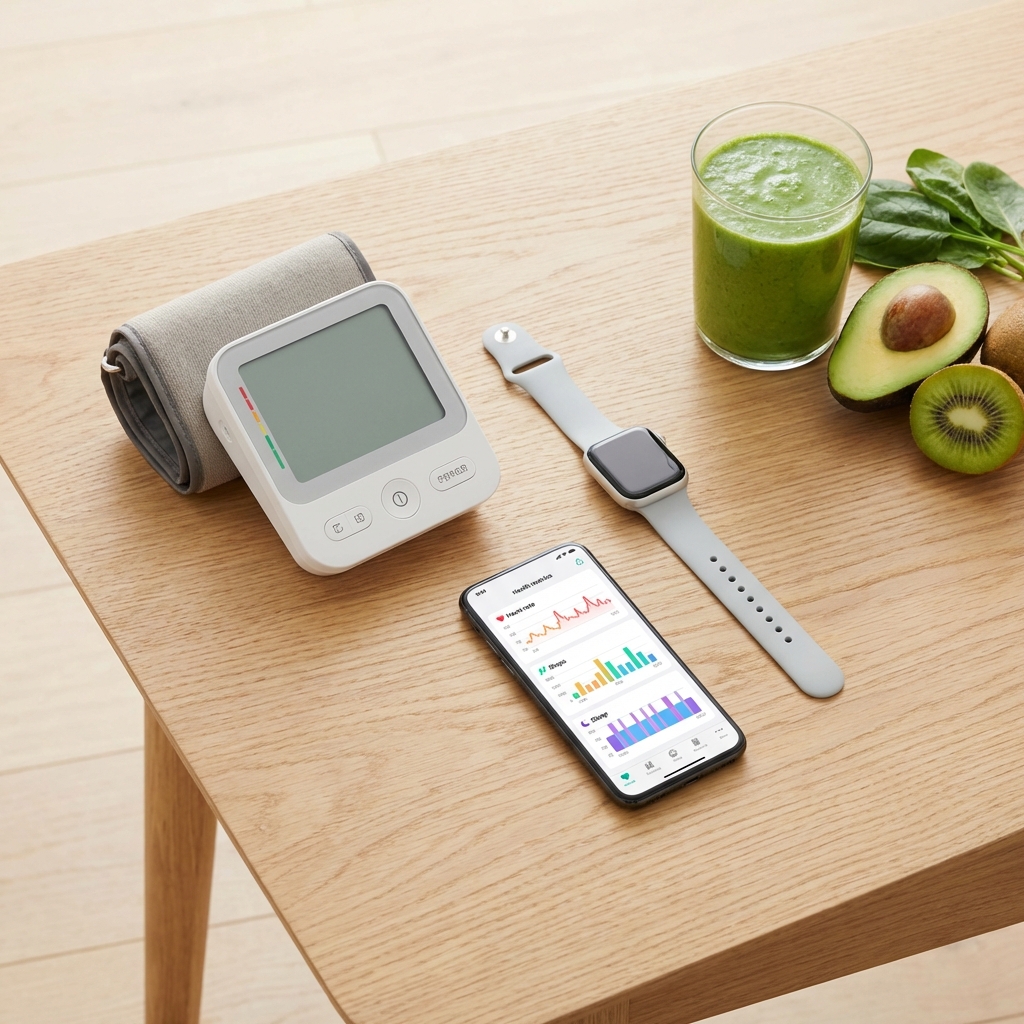
We live in a world where we can order groceries with a thumbprint and video chat with relatives across the ocean. Yet, when it comes to our health, many of us are still relying on memory ("Did I take that pill?") or waiting until we feel terrible to check our vitals. It doesn't have to be that way.
Quick Summary
- Home BP monitors, CGMs, smart scales, and wearables are now affordable and reliable
- Choose devices with FDA/CE/CDSCO certification for accuracy
- Check app privacy policies before sharing health data
- Share data summaries with your doctor, not raw data dumps
संक्षेप (हिंदी)
आज कई स्मार्ट डिवाइस जैसे BP मॉनिटर, ग्लूकोज सेंसर, और स्मार्टवॉच घर पर ही आपकी सेहत पर नज़र रख सकते हैं। यह गाइड बताता है कि कौन से डिवाइस खरीदें, उनकी प्राइवेसी कैसे चेक करें, और डॉक्टर को डेटा कैसे दिखाएं।
Why technology matters for everyday health
Technology isn't just for "biohackers" or athletes. For the everyday patient, the right tools act like a dashboard for your body. Just as you wouldn't drive a car without a speedometer or fuel gauge, you shouldn't manage hypertension or diabetes without data.
Reliable home tech empowers you to spot trends before they become emergencies, giving you peace of mind and making your doctor's job much easier.
Practical devices you can actually use
You don't need a degree in engineering to use these. Here are the most practical upgrades for your medicine cabinet.
🩺 Accurate home blood pressure monitors
Forget the old-school pumps that require a stethoscope. Modern digital monitors are essential for anyone over 40.
- What to buy: Look for an upper-arm cuff (wrist cuffs are popular but notoriously inaccurate). Ensure it has a "movement error" indicator and "irregular heartbeat" detection.
- How to use: Sit quietly for 5 minutes, feet flat on the floor, back supported. Don't talk while the machine is buzzing!
📊 Home glucose monitoring & CGMs
Continuous Glucose Monitors (CGMs) are small sensors stuck to your arm that send sugar readings to your phone 24/7.
- Who benefits: Obviously vital for Type 1 diabetics, but increasingly useful for Type 2 diabetics and even pre-diabetics wanting to see how chole bhature actually affects their body compared to dal.
- What they measure: They measure interstitial fluid (fluid between cells), not blood, so there is a slight lag. They show you the direction your sugar is heading—up or down—which is a game-changer for preventing crashes.
⚖️ Smart scales and body composition
The old bathroom scale just gave you one scary number. Smart scales send data to your phone and break it down.
- Realistic expectations: These use electrical impedance (a tiny, safe current) to estimate body fat and muscle mass. They aren't perfect—drinking a liter of water can "change" your muscle mass on the screen instantly. Use them to track trends over months, not daily fluctuations.
⌚ Wearables for heart rate and sleep
Smartwatches are fantastic for two things: Resting Heart Rate and Step Counts.
- When they help: If your resting heart rate suddenly jumps from 70 to 95 for three days, you might be fighting an infection or needing a medication adjustment.
- When they don't: Do not obsess over "Sleep Scores." Sometimes, the anxiety of trying to get a "perfect" sleep score actually keeps you awake!
Apps that make life easier
Your smartphone is the most powerful medical device you own if you install the right apps.
- Medication Reminders: Apps like Medisafe or even a simple recurring alarm are better than memory. Look for apps that let you add a "buddy" (like a spouse/child) who gets notified if you miss a dose.
- Symptom Trackers: Migraine or pain journals help your doctor spot triggers.
- Telemedicine Platforms: Video consults are here to stay. Pro tip: Use platforms that allow you to upload photos of your reports before the call starts. In India, many clinics now offer streamlined WhatsApp booking for video slots.
Safety, accuracy & privacy — what to check
Not all gadgets are created equal. Before you buy a device or download an app, run this 3-point safety check:
- The Certification: Does it have FDA clearance or a CE mark? In India, look for CDSCO approved devices where applicable.
- The Privacy Policy: If an app is free, you are likely the product. Check if they sell your data to advertisers. Look for apps that store data locally or use end-to-end encryption.
- The Battery: For medical devices, low battery = wrong readings. Replace batteries in BP monitors annually, even if they still "turn on."
How to bring tech into your care plan
Doctors love data, but they hate data dumps.
- Don't: Hand your doctor your phone and say, "Look at my last 6 months of sleep graphs."
- Do: Use the app to generate a PDF summary or simply say, "Doctor, my BP has averaged 140/90 this week, which is higher than last month."
- Coordinate: Ask us, "If my home reading goes above X, should I call you immediately or wait for the next appointment?"
🛒 Local Buying Guide
You don't need to import these from abroad. Most reliable brands (like Omron, Accu-Chek, or Beurer) are available on Amazon or 1mg.
For those in Mathura, you can find reliable service and demos at surgical supply stores near Holi Gate or Krishna Nagar, where you can often test the cuff size before buying.
Top 5 Recommended Tools (Generic Specs)
| # | Tool | Key Feature |
|---|---|---|
| 1 | The "Arm" Monitor | Digital Upper-Arm BP Monitor with Bluetooth |
| 2 | The "Sticky" Sensor | 14-Day CGM, water-resistant, no finger pricks |
| 3 | The "Honest" Scale | Wi-Fi Body Composition Scale (muscle vs. fat) |
| 4 | The "Pulse" Watch | Fitness Tracker with SpO2 + irregular rhythm alert |
| 5 | The "Pill" Manager | Smart pillbox or app with "dose taken" logs |
Patient Stories
"I thought my dizziness was just age. My smartwatch alerted me that my heart rate was dropping too low at night. I showed the data to Dr. Agrawal, and we adjusted my medication immediately."
"I used a CGM for two weeks just to see what happened. I realized my 'healthy' breakfast of oats and honey was spiking my sugar to 180. I switched to eggs and toast, and my energy crash disappeared."
🔒 Privacy Checklist for Patients
Before downloading a new health app, ask:
- Encryption: Does it say "End-to-End Encrypted"?
- Export: Can I easily download my own data as a PDF/Excel?
- Permissions: Does a calorie counter really need access to my contacts and location? (Answer: No).
Confused by the options?
Don't guess with your health. If you want to review your home readings or need advice on which device suits your condition, schedule a "Tech & Vitals Review" appointment with Dr. Ajay Agrawal today.
About the Author
Dr. Ajay Agrawal is an MD Physician in Aurangabad, Mathura with 26+ years of experience in Internal Medicine and preventive care.