Why Is My Hair Falling Out? 8 Causes Your Doctor Wants You to Know From stress and diet to thyroid and hormones — a doctor breaks down why young Indians are losing hair earlier than ever.
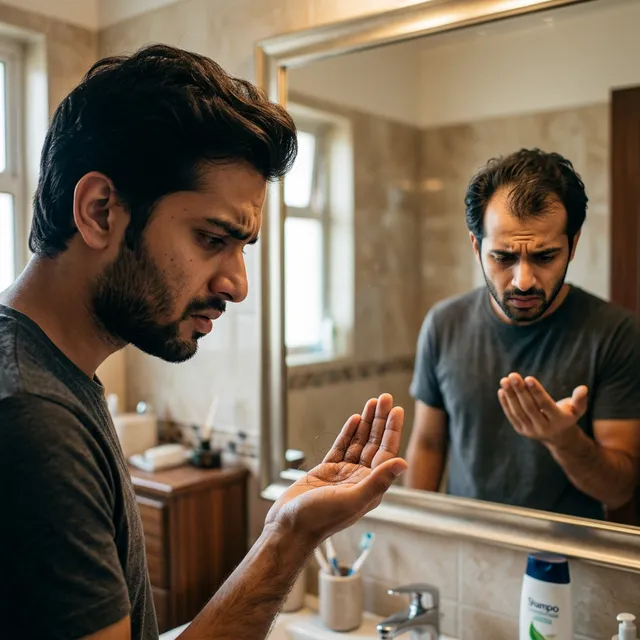
It starts quietly. A few extra strands on your pillow. A comb that collects more hair than usual. Then one morning, you look in the mirror and think: "Wait… is my hair actually thinning?"
If you're in your 20s or 30s and already worrying about hair loss, you're not imagining things — and you're definitely not alone. Over 60% of Indian men and 50% of women experience noticeable hair fall by their mid-30s. But here's what most people get wrong: they panic-buy shampoos and oils instead of understanding why it's happening.
As a physician with 26+ years of practice, I see patients every week who've spent thousands on products before asking the one question that actually matters: what's causing this?
Let's answer that — properly.
📋 Quick Summary
- Losing 50–100 strands/day is normal; more than that needs investigation
- The top causes: stress, nutritional deficiencies, thyroid imbalance, hormones (DHT), and poor sleep
- Most hair fall in young adults is reversible if caught early
- Self-treating with random products delays the real fix — get the root cause tested
- Simple blood tests (CBC, ferritin, thyroid, Vitamin D, B12) can reveal 80% of causes
संक्षेप (हिंदी)
क्या आपके बाल 20 या 30 की उम्र में ही झड़ रहे हैं? इसकी 8 सबसे बड़ी वजहें जानिए — तनाव, खानपान, थायरॉइड, हार्मोन और नींद की कमी। सही समय पर जांच कराएं तो ज़्यादातर बाल गिरना रोका जा सकता है। Dr. Ajay Agrawal, Mathura।
First things first: how much hair fall is actually "normal"?
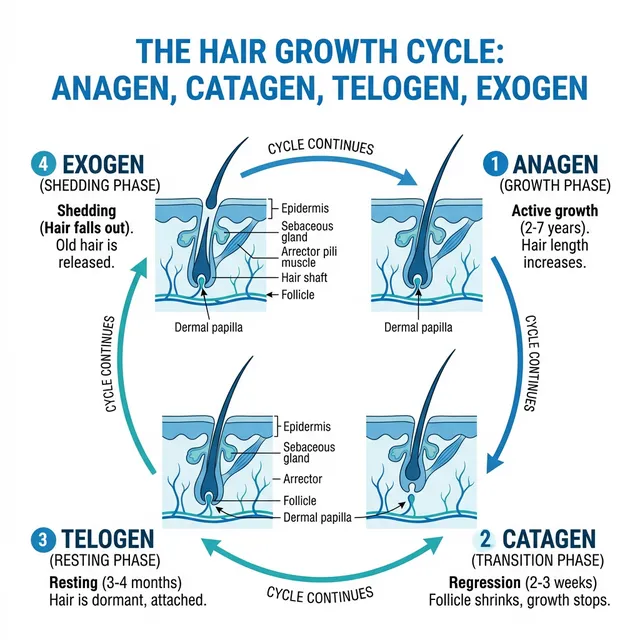
Your scalp has about 100,000 hair follicles. Each hair lives for 2–7 years before naturally falling out and being replaced. Losing 50–100 strands per day is completely normal — that's just your hair doing its job.
The problem starts when:
- You're losing noticeably more than usual for weeks at a stretch
- Your hairline is receding or your part is widening
- You see thin patches or your scalp becoming visible
- Hair is not growing back where it fell from
💡 Quick test: Run your fingers through your hair gently. If more than 6–8 strands come out in a single pass, consistently, that's worth investigating. Doctors call this the "pull test."
The 8 real causes of hair fall in young Indians
1. Nutritional deficiencies — the silent killer
This is the #1 cause I see in my clinic, especially among young men who skip meals, survive on junk food, or eat very little protein.
Your hair needs iron, zinc, biotin, Vitamin D, B12, and protein to grow. Miss any of these, and your follicles literally starve.
| Nutrient | Why Hair Needs It | Best Indian Sources |
|---|---|---|
| Iron | Carries oxygen to follicles | Palak, rajma, poha, jaggery |
| Vitamin D | Stimulates new follicle growth | Sunlight (15–20 min), eggs, fish |
| B12 | Red blood cell production for scalp circulation | Curd, milk, paneer, eggs |
| Zinc | Hair tissue repair & growth | Pumpkin seeds, chickpeas, cashews |
| Protein | Hair is 95% keratin (a protein) | Dal, paneer, eggs, chicken, soya |
| Biotin (B7) | Keratin infrastructure | Eggs, almonds, sweet potato |
✅ Do this: Get a simple blood test — CBC, serum ferritin, Vitamin D (25-OH), and B12. These four tests reveal the most common deficiencies behind hair fall. Cost: ₹800–1500 at most labs.
2. Stress — your hair feels it before you do
Remember that stressful exam season? That breakup? That job you hated? About 2–3 months later, your hair started falling. That's not a coincidence.
Chronic stress triggers a condition called telogen effluvium — where up to 70% of your hair follicles prematurely shift into the shedding phase. The cruel part? You don't see the hair fall when you're stressed. You see it months after.
📖 Real story: Arjun, 24, software engineer
Arjun came to me after noticing "handfuls of hair" falling during showers. He'd bought 3 different anti-hair-fall shampoos — none helped. When I asked about the last 3 months: he'd switched jobs, moved cities, and was sleeping 4–5 hours. His blood tests were mostly fine. The diagnosis? Stress-induced telogen effluvium.
What helped: Sleep hygiene, daily walking, breathing exercises, and patience. His hair started recovering in 8 weeks — without a single "hair growth" product.
3. Thyroid imbalance — the hidden culprit
Both hypothyroidism (underactive) and hyperthyroidism (overactive) cause diffuse hair thinning across the entire scalp. Thyroid disorders are extremely common in India — and many go undiagnosed for years.
If your hair fall comes with fatigue, weight changes, feeling cold, or irregular periods (for women) — get a thyroid panel done (TSH, T3, T4).
4. Hormones — especially DHT in men
Androgenetic alopecia (male pattern baldness) is driven by DHT — a hormone derived from testosterone. If your father or maternal grandfather has a receding hairline, there's a 50%+ chance you'll follow the same pattern.
The key signs: receding temples, thinning crown, but the back and sides stay thick. This is genetic, but it can be slowed down significantly if caught early.
💡 Key insight: Genetics loads the gun, but lifestyle pulls the trigger. Even with a family history, managing stress, nutrition, and sleep can delay or reduce pattern hair loss significantly.
5. Poor sleep — the underrated factor
Your body repairs hair follicles during deep sleep. If you're sleeping less than 6 hours, scrolling your phone until 1 AM, or waking up tired — your hair pays the price.
Sleep deprivation increases cortisol (stress hormone), disrupts growth hormone release, and weakens immune function — all of which accelerate hair fall.
6. Pollution and hard water
If you live in a city with hard water (high calcium and magnesium), it coats your hair strands, making them dry, brittle, and prone to breakage. Add pollution particles that clog scalp pores, and you've got a hostile environment for hair growth.
✅ Do this: Consider a basic shower filter if your water is visibly hard. Wash hair 2–3 times/week (not daily). Use a mild, pH-balanced shampoo — not the "anti-dandruff" one you've been using for 3 years straight.
7. Over-styling and product damage
Hair gels, wax, daily heat styling, tight man-buns, and excessive chemical treatments (coloring, straightening) physically damage the hair shaft. This causes breakage, not root-level hair loss — but the result looks the same in the mirror.
8. Medication side effects
Some common medications can cause hair fall as a side effect — including certain blood pressure pills, antidepressants, acne medication (isotretinoin), and even long-term use of antacids (which reduce B12 absorption).
✅ Do this: If hair fall started within weeks of starting a new medication, mention this to your doctor. Never stop prescribed medicines on your own — let your doctor evaluate and adjust if needed.
Myths that need to die 🪦
❌ Myth: "Wearing a helmet causes hair loss."
✅ Fact: Helmets don't cause hair loss. A sweaty, unwashed scalp under a helmet might cause dandruff or infection — but not actual hair follicle damage. Wear your helmet. Stay alive.
❌ Myth: "Oil massage makes hair grow faster."
✅ Fact: Oiling moisturizes the shaft and feels relaxing, but it doesn't penetrate deep enough to reach the follicle root. Vigorous massage can actually increase hair fall by pulling out telogen-phase hair.
❌ Myth: "Shaving your head makes hair grow back thicker."
✅ Fact: Shaving cuts hair at the surface. It doesn't change the follicle, growth rate, or thickness. The blunt edge just feels coarser when it grows back.
Is your hair fall normal? A quick self-check
✅ Check the statements that apply to you:
If 3+ boxes are checked: It's worth getting a proper evaluation. Don't self-treat — just get the right tests done and consult a doctor.
When to worry — red flag symptoms
🚨 See a doctor urgently if:
- Sudden, patch-like bald spots appearing on your scalp (could be alopecia areata)
- Hair loss with scalp pain, redness, or scaling (possible infection or autoimmune issue)
- Hair fall with rapid weight changes, extreme fatigue, or swelling (thyroid or hormonal)
- Complete eyebrow or eyelash loss along with scalp hair
- Hair loss after starting a new medication
An honest note from the doctor
"I can't tell you how many young patients walk in after spending ₹5,000–10,000 on 'miracle' hair products they saw on Instagram. By the time they come to me, they've wasted months.
Hair fall is usually a symptom, not a disease. Find the cause, and most of the time, the hair comes back. Skip the cause, and no shampoo in the world will help.
Start with the basics: Eat properly. Sleep 7+ hours. Get tested. Come talk to me if you're worried — I promise, it's not as scary as Google makes it sound."
— Dr. Ajay Agrawal, Aurangabad, Mathura
Frequently Asked Questions
How much hair fall per day is normal?
Losing 50–100 strands per day is normal. If you're consistently losing more, noticing visible thinning, a widening part, or bald patches, it may be time to investigate further.
Can stress alone cause hair fall?
Yes. Chronic stress triggers telogen effluvium, where follicles prematurely enter the shedding phase. This typically shows up 2–3 months after the stressful period and is usually reversible once stress is managed.
Should I take biotin supplements for hair fall?
Only if you have a genuine biotin deficiency (which is uncommon). Taking biotin without a deficiency has not been proven to reduce hair fall. Get your levels tested first.
Does wearing a cap or helmet cause hair loss?
No. This is a common myth. Helmets don't damage follicles. However, a very tight helmet on a sweaty scalp without regular washing may contribute to scalp infections, which could indirectly affect hair health.
Worried About Hair Fall?
Don't waste money on random products. Get the right tests, find the root cause, and fix it properly. Book a consultation with Dr. Ajay Agrawal in Mathura.

About Dr. Ajay Agrawal
MD Physician in Aurangabad, Mathura with 26+ years of experience in Internal Medicine. Known for patient-first, compassionate care and thorough diagnostic approach.
📱 Share this article
"Losing hair in your 20s? Don't panic-buy products. Here are the 8 real causes — and what actually works. 🩺 #HairFall #DrAjayAgrawal"
"Bhai, agar baal jhad rahe hain toh ye padh le. Doctor ne 8 asli reasons bataye hain — aur kya karna chahiye. Bahut kaam ki guide hai. 🔗"
Related Posts
The Hair Fall Diet: What to Eat (and Avoid)
A practical Indian diet plan for stronger hair — with the foods, supplements, and home remedies that actually work.
Hair Fall: When Should You Actually See a Doctor?
The tests to get, the treatments that work, and how to tell normal shedding from a real problem.
Stress Management for Working Professionals
2-minute resets, daily habits, and burnout watchlist you can use today.
Preventive Health Checkups: What Every Adult Should Do
An age-aware checklist for your yearly health — BP, sugars, lipids, and screenings.